
Learn: The functions of NPK in aquarium plants
Nitrogen: found in chlorophyll, nucleic acids and amino acids; component of protein and enzymes.
Phosphorus: an essential component of DNA, RNA, and phospholipids, which play critical roles in cell membranes; also plays a major role in the energy system (ATP) of plants.
Potassium: plays a major role in the metabolism of the plant, and is involved in photosynthesis, drought tolerance, improved winter hardiness and protein synthesis.
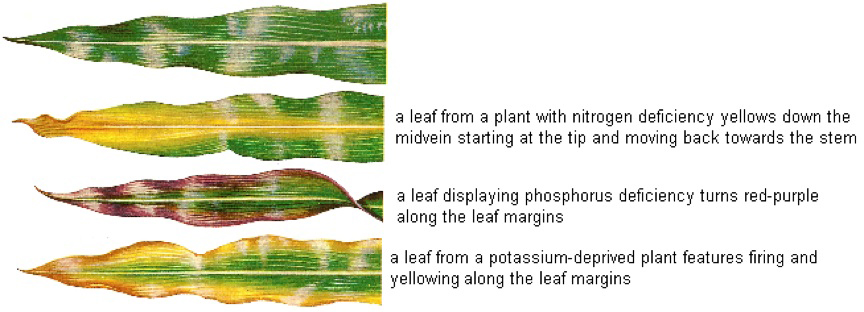
Nitrogen N
It is a component of chlorophyll, so when nitrogen is insufficient, leaves will take on a yellow (chlorotic) appearance down the middle of the leaf. New plant growth will be reduced as well, and may appear red or red-brown. Because of its essential role in amino acids and proteins, deficient plants and grains will have low protein content. Nitrogen excess results in extremely dark green leaves, and promotes vegetative plant growth. Nitrogen is mobile both in the soil and in the plant.
Phosphorus P
Phosphorus is another essential macronutrient whose deficiency is a major consideration in cropping systems. It is an essential part of the components of DNA and RNA, and is involved in cell membrane function and integrity. It is also a component of the ATP system, the "energy currency" of plants and animals. Phosphorus deficiency is seen as purple or reddish discolorations of plant leaves, and is accompanied by poor growth of the plant and roots, reduced yield and delayed maturity. Phosphorus excess can also present problems, though it is not as common. Zinc deficiency might occur in soils with extreme phosphorus levels. Phosphorus is generally immobile in the soil and is somewhat mobile in plants.
Potassium K
Potassium is the third most commonly supplemented macronutrient. It has important functions in plant metabolism, is part of the regulation of water loss, and is necessary for adaptations to stress. Plants that are deficient in potassium may exhibit reductions in yield before any visible symptoms are noticed. These symptoms include yellowing of the margins and veins and crinkling or rolling of the leaves. An excess, meanwhile, will result in reduced plant uptake of magnesium, due to chemical interactions.
Recent Posts
-
GLA Nectar Liquid Fertilizers – A Comprehensive Guide and Dosing Strategies
Achieving a thriving, beautifully planted aquarium requires more than just adding water and light; i
-
Nature Aquarium Dry Fertilizer Dosing Guide, Dosing Charts & Calculator, & DIY Nutrient Strategies – PPS-Pro & Estimative Index (EI) Methods
Nature Aquarium Dry Fertilizer Dosing Guide, Dosing Charts & Calculator, & DIY Nutrient Strategies
-
How to: GLA Aquarium CO2 Regulator, CO2 System, CO2 Tank Refills, Install & Monitor CO2 Drop Checker
How to Install: GLA GRO Aquarium CO2 Regulator How to Install: GLA PRO-DS (Modular) Aquarium CO2 Re