How Aquarium CO2 Drop Checkers Work
A CO2 drop checker provides a simple visual reference for monitoring approximate dissolved CO2 levels in a planted aquarium. By observing changes in indicator color, aquarists can evaluate CO2 availability and make gradual adjustments to support healthy aquatic plant growth.
How It Works: A drop checker contains a 4 dKH reference solution combined with a pH indicator such as bromothymol blue. A small airspace separates the indicator solution from the aquarium water. As CO2 moves between the aquarium water, airspace, and indicator solution, the solution's pH changes, producing a corresponding color change.
Understanding Drop Checker Colors: When used with a properly prepared 4 dKH reference solution and compatible indicator, the colors generally represent:
- Blue: Lower dissolved CO2 concentration.
- Green: An approximate CO2 concentration near 30 ppm, a commonly used reference for planted aquariums.
- Yellow: Elevated dissolved CO2 concentration that warrants careful evaluation.
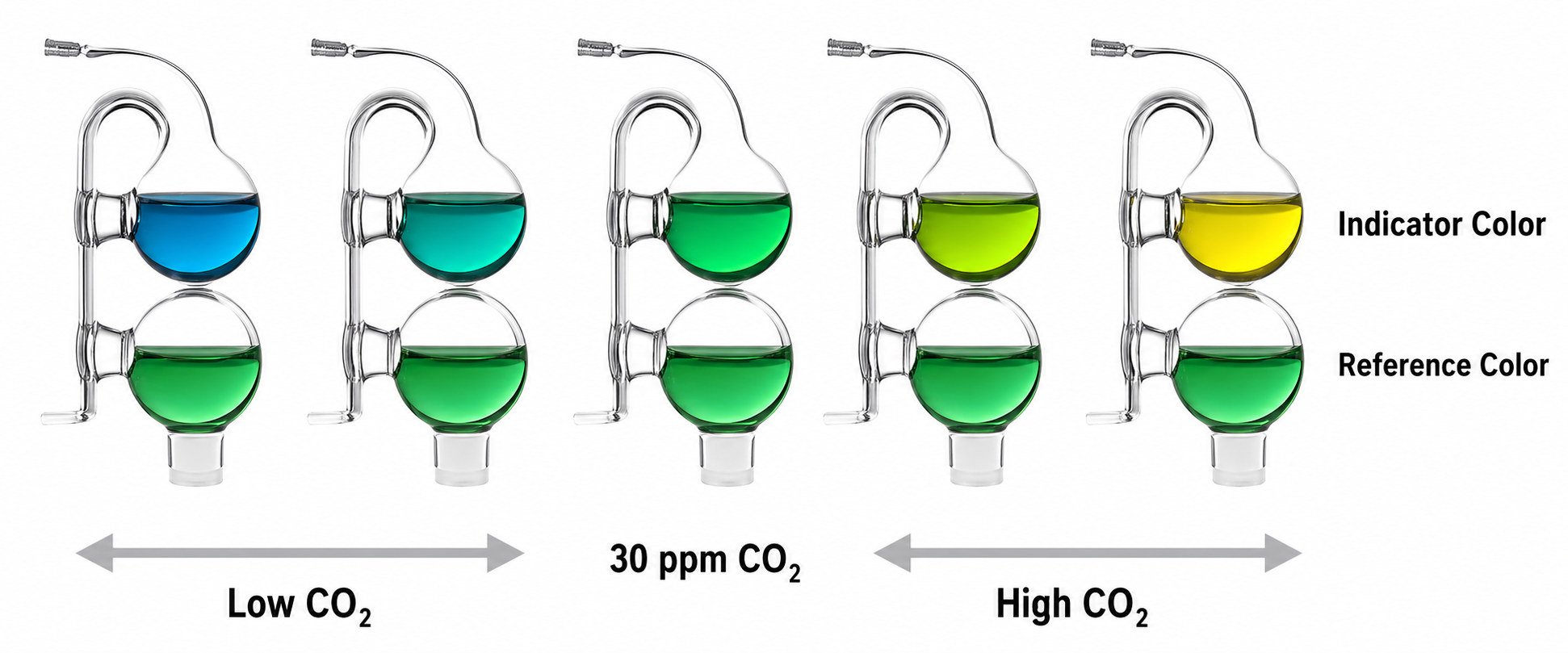
Installation & Monitoring: Position the drop checker inside the aquarium with its opening facing downward and submerged, allowing the indicator solution to remain separated from the aquarium water. Choose a visible location with representative water circulation.
Drop checkers respond gradually rather than providing real-time measurements. Allow approximately 2 hours or longer after CO2 adjustments before evaluating the indicator color. Consider the results alongside plant growth, water circulation, and livestock behavior.
Choosing the Correct Solution: GLA drop checker kits include ready-to-use, premixed indicator solution. Our standalone GLA 4 dKH Reference Solution requires the addition of bromothymol blue or a compatible pH indicator before use.
Important: A green drop checker does not guarantee that CO2 levels are appropriate for every aquarium. If fish or shrimp show signs of distress, stop CO2 injection immediately and increase aeration or surface agitation. Do not wait for the indicator color to change.
For detailed setup instructions, indicator preparation, placement, and troubleshooting, see our Complete Guide to Aquarium CO2 Drop Checkers.


